A teenager bursts into genuine laughter in front of his screen: he has just devoured the very last chapter of a manga, freshly published… on the other side of the planet. While official publishers struggle to keep up, an army of fans, quick as lightning, is already translating and sharing these highly coveted pages.
Behind this enthusiasm lies a dilemma. The fervor of scanlation, fascinating, opens wide the doors of manga culture, while walking the fine line of illegality. Why do so many readers rush to these amateur versions, even if it means playing with the boundaries of the law? Between collective energy and legal uncertainty, the line blurs, as uncertain as a dialogue bubble hastily erased.
Scanlation: between community momentum and a springboard to manga culture
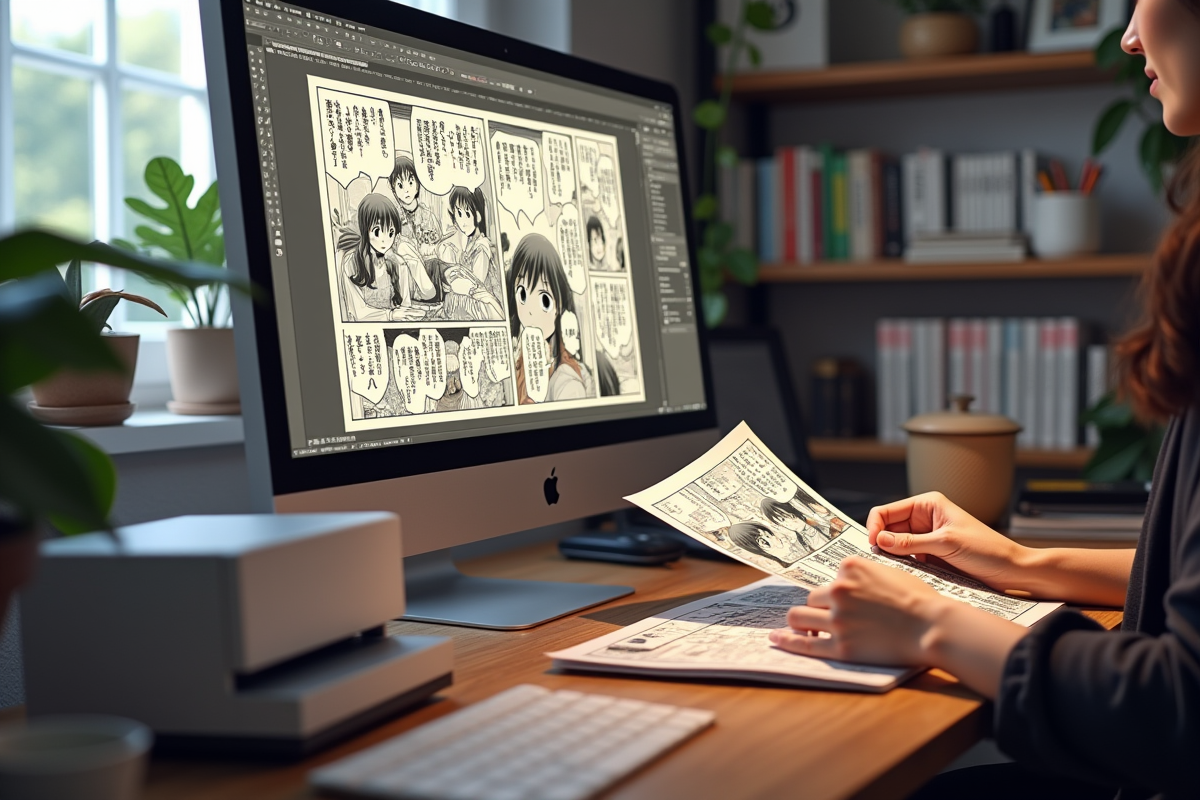
For two decades, the scanlation community has been active in the shadows and the light, at the crossroads of manga passion and the desire to make works sometimes hard to find or belatedly translated into French accessible. The portmanteau word scan and translation sums it all up: digitizing chapters, translating them, editing them, and then distributing them for free on a multitude of dedicated sites. This mechanism, born from the enthusiasm of fans, has paved the way for generations of readers, allowing them to enjoy unpublished series long before their official release, and to forge a direct connection with Japanese creation.
For a large segment of the audience, scan manga is like a digital treasure chest: thousands of mangas online, accessible in the blink of an eye. Platforms like Crunchyscan embody this vitality and popularity, while raising questions about the economic model and the respect owed to authors. Manga scanlation is the experience of immediate, collective reading, where amateurs surpass themselves to offer increasingly polished translations, almost in real-time compared to the Japanese release.
- Immediate discovery of mangas still absent from French shelves
- Community sharing and lightning-fast dissemination of manga culture
- Strengthening ties between Japanese animation and readers worldwide
This mode of dissemination of manga culture through scanlation disrupts the practices of traditional publishing and online reading. The web continues to attract, but the question remains: how far can we rely on collective enthusiasm without straying from official channels?
Legal gray area: what boundaries and repercussions for readers and creation?
The gray area in which scanlation operates continues to spark debate. Distributing works without the consent of authors or publishers is stepping outside the legal framework and exposes both readers and amateur translators. This departure from copyright weakens the protection of creators and fuels a constant tension between fan fervor and respect for established rules.
Scanlation platforms thrive on this tenuous line. On one hand, they allow anyone to discover new series with a click, for free. On the other, they deprive authors and publishers of a fair remuneration. In the face of this balancing act, the manga industry is trying to respond: simulpub – simultaneous publication in France and Japan – seeks to meet the demand for immediacy while protecting copyright.
- Resorting to scanlation can expose readers to legal action, rare but possible, and leaves uncertainty hanging over the survival of many platforms.
- Innovative tools, blockchain or NFTs, are beginning to emerge to better protect works and offer a legal reading online.
The rise of legal subscription platforms offers another path, one of a fragile balance between respect for the law and support for the industry. Between immediate access and protection of creators, the tension remains high. The gray area persists, a mirror of the struggles between innovation, sharing, and respect for the legal framework.
A reader closes his tab, his gaze already turned to the next chapter, uncertain of the boundary he has just crossed. Scanlation, passion or offense? The debate is just beginning.