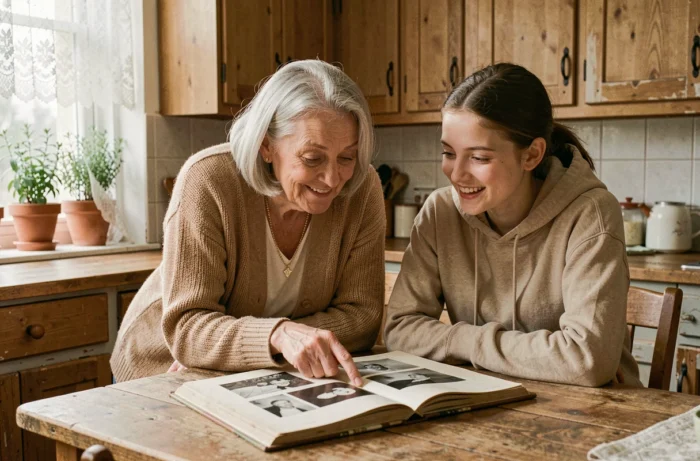
A child listening to their grandfather recount a school memory, a student sharing dinner with a retired person in exchange for reduced rent: these seemingly mundane situations produce measurable effects on health and social connections. Intergenerational refers to these voluntary exchanges between people of different ages, and it goes far beyond the family framework to be included in French public policies.
Solidarity intergenerational cohabitation: a still little-known legal framework
When we talk about intergenerational, we often think of shared snacks between nurseries and retirement homes. But since the ELAN law, and more specifically its article 117, solidarity intergenerational cohabitation has a legal framework. The principle: a person aged at least 60 welcomes a young person under 30 into their home.
The system provides for two possible forms. The accommodation can be provided free of charge, or with a modest fee. In return, the young person ensures regular presence or provides predefined services in a contract.
This mechanism addresses two concrete problems. On one hand, the isolation of seniors living alone in a home that has become too large. On the other, the difficulty for young people to find housing in tight areas. Solidarity cohabitation creates a direct exchange, without a heavy institutional intermediary, where everyone gains something tangible.
To better understand the dynamics of these intergenerational links, you can discover intergenerational on Dididou, which details the concrete benefits of these daily connections.
Intergenerational residences in France: why they don’t change everything
Intergenerational residences are increasingly attracting interest from local authorities and developers. The concept seems appealing: bringing together students, families, and retirees in the same building around shared spaces (garden, shared room, laundry).
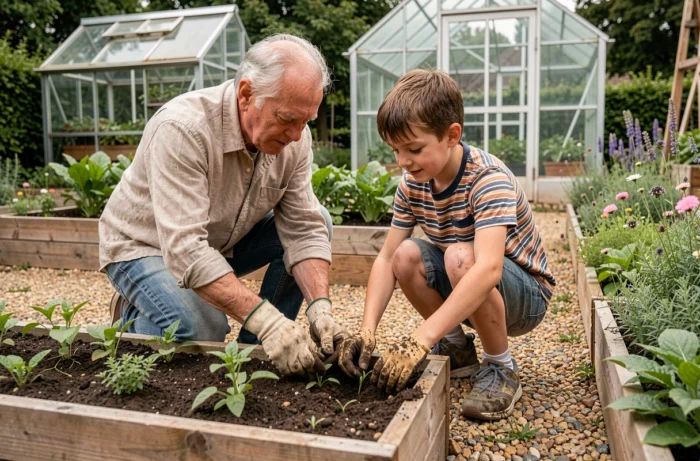
But these residences do not benefit from an autonomous legal status. They fall under common rental law. Their intergenerational character entirely depends on the design of the real estate program and the activities offered. Without an invested manager, age diversity does not automatically produce social connections.
The difference between a functioning intergenerational residence and one that merely displays the label lies in three concrete elements:
- A shared activity program, led by a dedicated coordinator, and not just a common room left empty
- Leases or agreements that explicitly require residents’ commitment to collective life
- A real diversity of profiles (ages, family situations, income levels), and not just seniors and students
Intent alone is not enough. The intergenerational link cannot be decreed by an architect’s plan, it is built through repeated and structured interactions.
Preventing isolation: intergenerational as a public health lever
Intergenerational is now integrated into public policies for preventing isolation, far beyond mere leisure activities. Recent initiatives involve young professionals, families, residents in autonomous housing, schools, and inhabitants of the same neighborhood.
Have you ever noticed that an active senior in their neighborhood often seems to be in better shape than another of the same age, who is well surrounded by family but confined at home? The quality of social connections matters more than the quantity of contacts. A regular exchange with someone from another generation, even brief, stimulates cognitive functions and reduces feelings of loneliness.
A survey by Uniopss indicates that more than two-thirds of the organizations surveyed have integrated an intergenerational dimension into their actions promoting healthy aging. This figure shows that the associative sector has moved beyond the experimental stage.
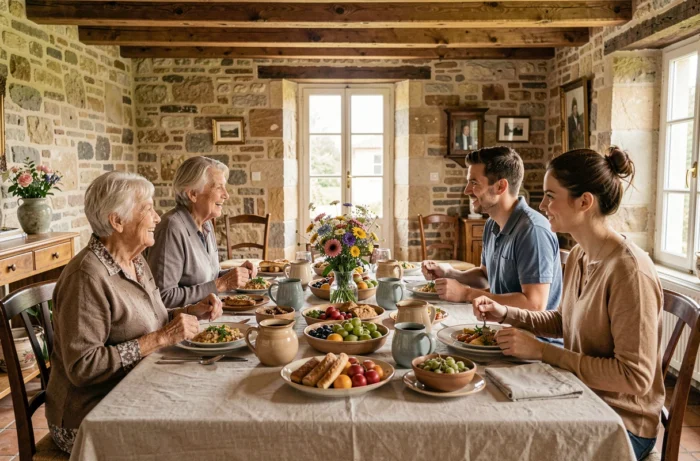
For young adults too, these connections have an impact. Urban young professionals, often distanced from their families, may experience a paradox: being surrounded by colleagues and friends of the same age while feeling a form of emotional isolation. The relationship with an older person brings a different emotional stability, a form of solidarity that does not rely on performance or immediate reciprocity.
Civic service and volunteering: concrete formats to create links between generations
Civic service offers a structured framework for intergenerational missions. Young people aged 16 to 25 engage in structures welcoming elderly people, not as caregivers, but as connectors. Reading aloud, digital support, memory workshops: these missions place human relationships at the center.
Voluntary associations complement this system. Grassroots organizations develop projects that go beyond simple occasional visits:
- Workshops for transmitting manual skills (sewing, gardening, cooking) where the senior teaches and the young person brings their energy
- School mentoring programs where retirees support struggling students over time
- Regular meetings between nurseries and autonomous residences, with a fixed schedule and educational objectives
Regularity transforms encounters into relationships. A monthly workshop over a year produces effects that three annual visits cannot approach. The structures that work best are those that commit for the long term, with identified participants and follow-up.
Intergenerational does not boil down to a good general idea about solidarity between ages. It relies on legal frameworks, design choices, and specific human commitments. What makes the difference is regularity and structure, not spontaneity or grand declarations of intent.