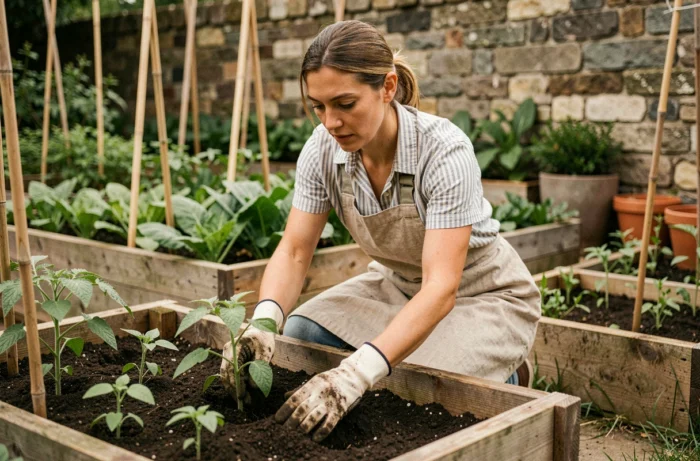
Growing your own vegetables all year round doesn’t require a huge plot of land or years of experience. A productive vegetable garden comes down to a few technical choices made at the right time: well-nourished soil, crops suited to each season, and thoughtful watering. Everything else follows from these three essentials.
Water restrictions and vegetable gardens: what gardening guides leave out
You’ve already planned your summer sowings and planted your tomato seedlings when a local order comes through: watering is banned between 8 a.m. and 8 p.m. This is becoming an increasingly common situation.
Drought measures regulate or prohibit watering vegetable gardens depending on the alert level and location. In October 2026, the Maine-et-Loire prefecture reported that, despite some restrictions being eased, groundwater levels remained fragile and replenishment had not yet begun. A rainy summer doesn’t mean water supplies have recovered.
Before each season, check the official VigiEau website to find out which rules apply in your municipality. This directly affects your choice of crops and watering system. It’s better to choose water-efficient vegetables than to rely on thirsty varieties you won’t be able to irrigate properly.
On Conseil Jardinage’s vegetable garden page, you’ll find helpful guidance on adapting your crops to local conditions.
Build fertile soil before sowing anything
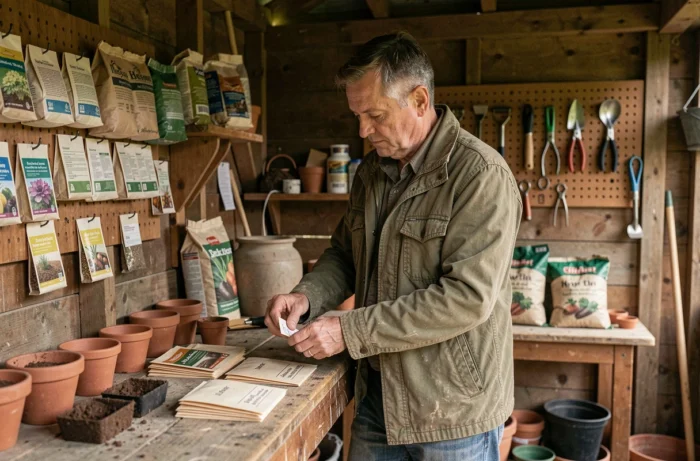
A productive vegetable garden starts below the surface. Soil determines how plants grow, how well they resist disease, and even how vegetables taste. Planting in poor soil is like building on sand.
Assess the soil beneath your feet
Take a handful of damp soil and squeeze it. If it forms a sticky ball that holds together, your soil is clay. If it crumbles immediately, it’s sandy. In between is loam, which is often ideal for a vegetable garden.
Every soil type can be improved with compost. Clay soil becomes looser, while sandy soil holds water better. Compost is an all-purpose soil conditioner.
Feed the soil, not the plants
Many novice gardeners apply fertilizer directly around the base of their plants. Over the long term, the opposite approach works better: feed the soil so it can feed the plants.
- Add a few centimeters of mature compost to the surface twice a year, in fall and spring.
- Cover bare soil with organic mulch (fallen leaves, straw, dry grass clippings) to protect microbial life and reduce evaporation.
- Avoid digging deep into the soil: a light raking is enough to aerate it without destroying the organisms working for you.
Living soil covered with mulch retains moisture much longer than bare earth. It’s the most cost-effective way to create a self-sufficient vegetable garden all year round.
A growing calendar tailored to your local climate
A “universal” sowing calendar found online may not be a reliable guide for your planting. Conditions vary greatly from one region to another, sometimes even from one valley to the next. Rather than following a standard chart, create your own calendar by combining two factors: the date of the last spring frost in your area and the growing time required for each vegetable.
Fall and winter vegetables for a continuous harvest
Growing vegetables all year round depends largely on the colder months. Many gardeners stop tending their vegetable gardens in October, even though some crops thrive at this time of year.
Salad greens, spinach, leeks, Brussels sprouts, and late-season carrots can withstand light frost and even taste better after the first frosts. Winter radishes, such as black radishes, are sown in late summer for a fall harvest.
Fall sowings take place between August and September, well before the cold sets in. This is what beginners most often overlook: by the time you think of it in November, it’s too late.
Stagger sowings to avoid a glut
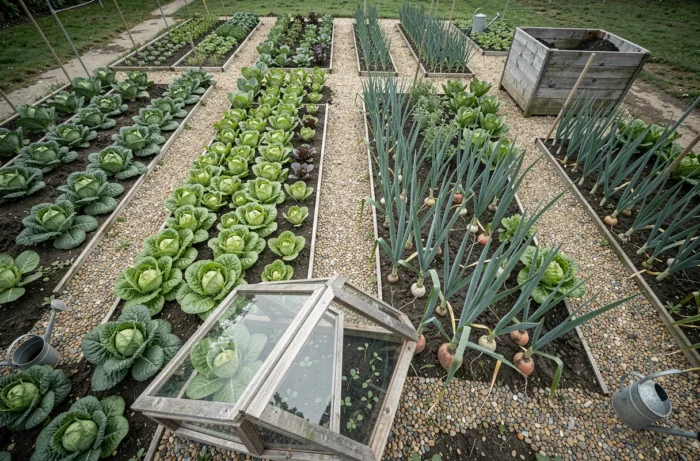
Sowing all your lettuce on the same day means ten heads will be ready at once. The result: half of them will bolt before you can eat them. Succession sowing—planting a small amount every two to three weeks—naturally spreads out the harvest.
This technique works especially well for radishes, green beans, arugula, and spinach. You can harvest regularly without a glut or waste.
Water efficiently: combine drip irrigation and mulch
Watering with a hose or watering can wastes a significant amount of water through evaporation and runoff. With restrictions becoming more common, installing a drip irrigation system at the base of your plants can make all the difference.
Drip irrigation delivers water directly to the roots without wetting the foliage. It also helps limit fungal diseases on tomatoes, zucchini, and cucumbers, which don’t like moisture on their leaves.
- Water early in the morning or late in the day to reduce evaporation.
- Combine drip irrigation with a thick layer of mulch to keep the soil cool for much longer.
- Collect rainwater in a tank. Even a small rain barrel can meet some of your needs between rain showers.
- Check local restrictions on VigiEau before setting up your summer watering routine.
A well-mulched vegetable garden watered with drip irrigation requires far less work than one watered by hand. You can put the time you save into monitoring your plants and preventing problems.
A productive vegetable garden all year round doesn’t require complex techniques. Well-maintained soil, sowings staggered to suit your actual climate, and water-efficient irrigation create a system that largely regulates itself. Treat your first season as a trial: keep track of sowing dates, harvests, and failures. This garden journal will become your most valuable gardening tool.