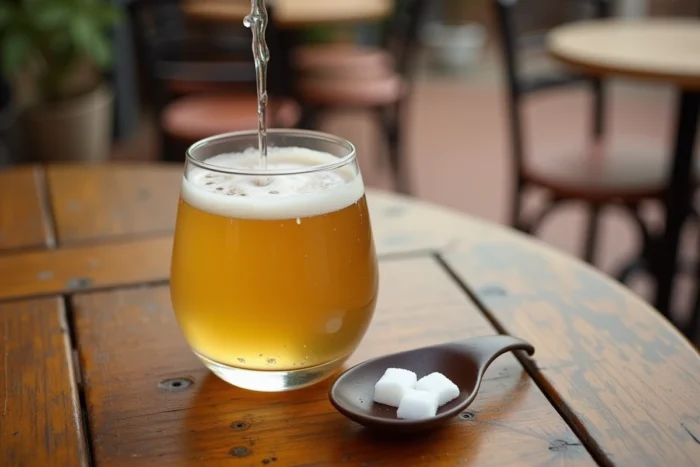
Does a glass of Ricard served on the terrace really contain a lot of sugar, or is the sweet reputation of pastis based on a confusion with the alcohol itself? The question deserves to be asked with data, not impressions. Ricard has an alcohol content of 45% vol., making it a strong spirit, but its declared sugar content remains low compared to other aniseed drinks or liqueurs.
This article precisely measures what a glass of Ricard contributes in sugar and calories, then compares these values to other common aperitif drinks.
Calories in Ricard: what alcohol weighs against sugar
The confusion between sugar and calories is common when talking about pastis. Alcohol provides about 7 kcal per gram, compared to 4 kcal per gram for sugar. In a spirit with 45% vol. like Ricard, almost all the calories come from ethanol, not carbohydrates.
The nutritional information for Ricard indicates a very low sugar content per 100 ml of pure product. When serving a standard dose of 2 to 2.5 cl diluted in five to seven volumes of water, the amount of sugar actually ingested becomes marginal. To know precisely how much sugar is in Ricard, one must distinguish the pure product from the served glass, as dilution radically changes the concentration.
On the other hand, the calories related to alcohol remain the same regardless of the amount of water added. Diluting your Ricard does not reduce the caloric intake; it only changes the total volume of the glass.
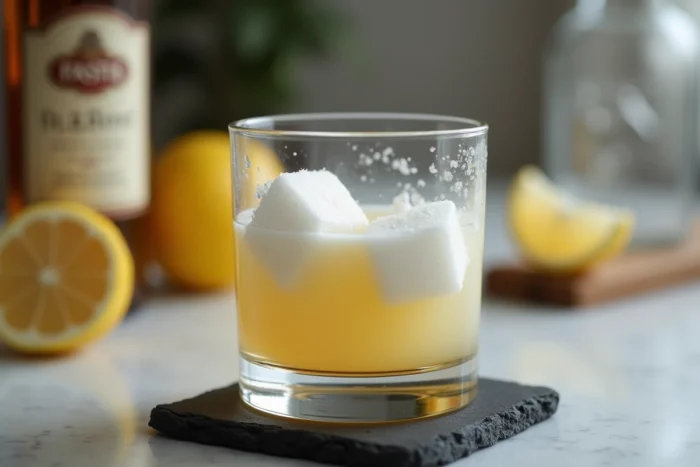
Ricard, wine, beer, and cocktails: comparative table of sugars and calories
Comparing Ricard to other alcoholic beverages helps to place its sugar content in a concrete context. The table below gathers the available data for a standard glass of each drink.
| Drink | Standard Volume | Sugar Content | Calories (estimate) |
|---|---|---|---|
| Ricard (pastis 45% vol.) | 2 to 2.5 cl + water | Very low | High (alcohol) |
| Red wine (12-14% vol.) | 12 to 15 cl | Low (dry wine) | Moderate |
| Pale beer (5% vol.) | 25 cl | Variable depending on brewing | Moderate |
| Cocktail with syrup | 15 to 25 cl | High | High (alcohol + sugar) |
| Cassis cream (liqueur) | 4 to 6 cl | Very high | High (sugar + alcohol) |
Ricard is one of the least sugar-laden spirits per served glass. Its position in this table is due to the nature of pastis, a dry spirit, unlike liqueurs or cocktails containing syrup, fruit juice, or cream.
In contrast, a beer or sweet wine provides more carbohydrates per glass. Syrup-based cocktails accumulate both sources of calories, placing them at the top of the caloric ranking.
Sugar in Ricard and blood sugar: a parameter to monitor for diabetics
For people with diabetes or prediabetes, the question of sugar in Ricard arises differently. Spirits like vodka, gin, or pastis have a glycemic index close to zero, as they provide alcohol but almost no assimilable carbohydrates.
A Ricard served without syrup or added sugar thus approaches the glycemic profile of pure spirits. The carbohydrate load remains significantly lower than that of a beer or a juice-based cocktail.
The real risk for diabetics does not come from the sugar in Ricard, but from the alcohol itself. Ethanol can cause delayed hypoglycemia by blocking hepatic glucose production. This phenomenon occurs several hours after consumption, sometimes during the night.
- Pure pastis does not significantly raise blood sugar at the time of consumption, unlike a kir or a mojito.
- Alcohol disrupts hepatic glycemic regulation for several hours, regardless of the sugar content in the drink.
- People on hypoglycemic treatment must exercise extra caution, as the combined effect of alcohol and medication amplifies the risk of nocturnal hypoglycemia.
Anise, licorice, and flavors: does Ricard taste sweet without actually being so?
The taste of Ricard gives an impression of sweetness that deceives the palate. Star anise and licorice, two major components of the recipe, produce a round, almost sweet flavor without providing significant carbohydrates.
This discrepancy between taste perception and nutritional composition explains why so many consumers overestimate the sugar content of pastis. The perceived sweet flavor comes from the aromas, not from carbohydrates.
The addition of syrup (orgeat, mint, grenadine) in a pastis radically transforms the nutritional profile. A “perroquet” (pastis + mint syrup) or a “mauresque” (pastis + orgeat syrup) contains several grams of added sugar per glass. These popular variations shift pastis from the “low-sugar drink” category to that of sweet cocktails.

What really adds sugar to a glass of Ricard
- Orgeat syrup in the mauresque adds a significant dose of simple sugars to each glass.
- Mint syrup in the perroquet adds a comparable amount of carbohydrates.
- Grenadine syrup in the tomato accumulates sugar and coloring, completely altering the caloric balance.
- A Ricard served “neat” (water only, no syrup) remains in the category of low-sugar drinks.
The sugar in Ricard does not come from Ricard, but from what is added to it. A pastis diluted with water remains one of the least sweet alcoholic aperitifs on the market.
The main caloric contributor remains ethanol, with its 7 kcal per gram. For those concerned about their sugar intake, drinking pastis without syrup makes a measurable difference. Moderation regarding alcohol itself remains the most determining lever for health.