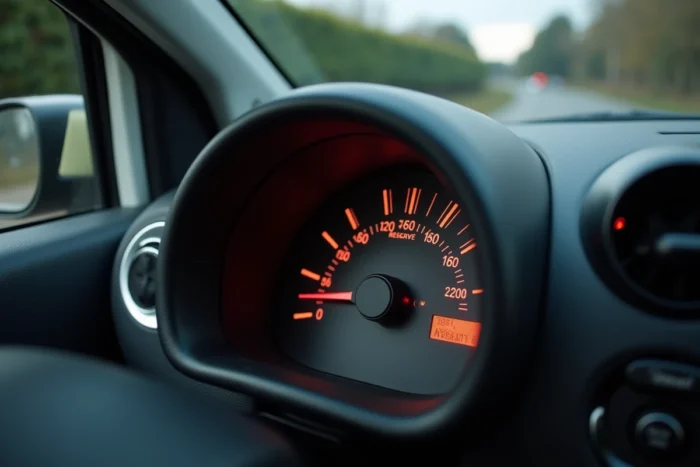
On the Renault Twingo 3, the reserve light comes on when there are about 5 to 6 liters of fuel left in the tank. This technical data directly affects the distance the vehicle can still cover before running out of fuel. Depending on driving conditions and engine type, the remaining range varies significantly from one driver to another.
Reserve volume and distance calculation on Twingo 3
The tank of the Twingo 3 holds around forty liters in total. The threshold for the warning light is around 5 to 6 liters remaining. This volume constitutes the usable reserve before the engine stops.
To estimate the distance that can be traveled, this volume must be related to the vehicle’s actual consumption. In urban use, the Twingo 3 consumes more than in mixed or suburban cycles. On stabilized roads at moderate speeds, consumption decreases, which mechanically extends the remaining range.
In practice, most drivers have a range of between 80 and 100 kilometers after the warning light comes on, in mixed conditions. This figure drops significantly in the city, where frequent stops and restarts increase consumption. To better understand the fuel reserve range on Twingo 3, the distinction between urban and suburban use remains crucial.

EDC gearbox or manual gearbox: effect on reserve range
Twingo 3 models equipped with a dual-clutch EDC gearbox behave differently from those with a standard manual gearbox. On the highway, especially on prolonged climbs, user feedback reports a sharp drop in the distance traveled after the warning light comes on compared to urban driving.
The EDC gearbox automatically adjusts the gears but puts more strain on the engine during acceleration and heavy load phases. In the city, both transmissions offer comparable reserve ranges. The difference widens on long journeys with elevation changes.
With a manual gearbox, the driver can choose to downshift less often and maintain a low engine speed, which reduces consumption. This option does not exist on the EDC version, where the electronics decide when to shift gears.
What fuel to gain a few extra kilometers
Feedback from Twingo 3 drivers indicates a slight reduction in consumption in suburban use with SP95-E10 or SP98 containing detergent additives. The effect is modest, but it can represent a few extra kilometers once the warning light comes on, especially at stabilized speeds.
This marginal gain does not justify changing fuel types systematically. It becomes relevant especially when the driver knows they will need to cover a long distance before finding a station.
Regularly driving on reserve: risks for the fuel pump
The reserve light indicates a temporary situation, not a normal operating mode. Renault-specialized mechanics have reported a rise in fuel pump failures in high-mileage Twingo 3 models whose owners frequently let the tank drop below a quarter full.
The fuel pump, submerged in the tank, uses the surrounding gasoline to cool itself. When the level repeatedly remains low, the pump heats up more and wears out prematurely. Replacing this part represents a significant cost.
The deposits and impurities that accumulate at the bottom of the tank pose a second problem. By driving on reserve, the pump draws fuel laden with residues, which can clog the filter and, over time, affect the injectors.
- Do not always wait for the warning light to fill up; refill the tank as soon as it reaches a quarter full.
- For Twingo 3 models that have exceeded high mileage, have the condition of the fuel pump checked during regular maintenance.
- Avoid parking the vehicle for long periods with a nearly empty tank, especially in hot weather, to limit internal condensation.
Reliability of the reserve light on the Twingo 3
The dashboard warning light does not always accurately reflect the actual volume present in the tank. The level sensor, a float connected to a variable resistor, loses accuracy over time and with vibrations.
The light may come on a few liters too early or too late depending on the wear of the sensor, the vehicle’s tilt (sloping road, prolonged turn) or the outside temperature. Some Twingo 3 models also display a trip computer that recalculates the remaining range, but this estimate is based on recent average consumption, not on the exact volume of fuel.
In case of doubt about the reliability of the warning light, comparing the mileage traveled since the last fill-up with the usual consumption provides a more reliable indication. A logbook or regular mileage recording at each fill-up allows anticipating the switch to reserve even before the light comes on.
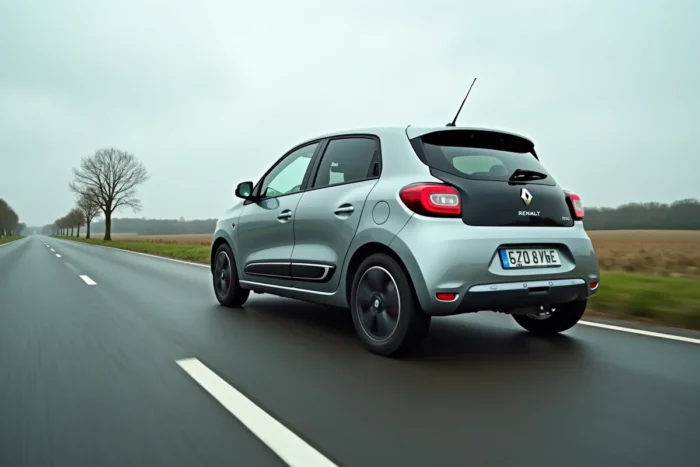
The Twingo 3 offers a reasonable safety margin once the light comes on, sufficient to reach a gas station in most urban and suburban situations. Expect 80 to 100 kilometers under normal conditions remains a reliable estimate, provided that this margin is not turned into a habit. The fuel pump and the supply circuit do not handle repeated descents below the reserve threshold well, especially on models that accumulate mileage.